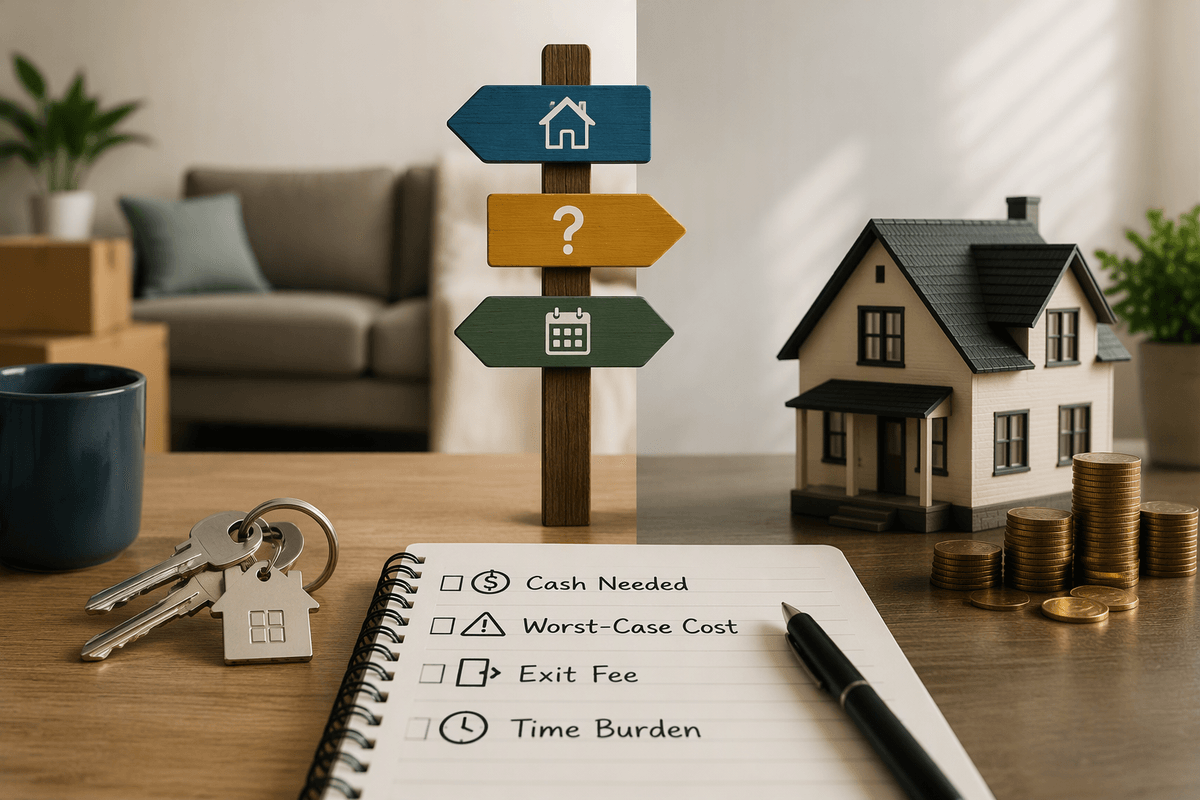
You’re paid, but bills still feel unpredictable
Payday hits on schedule, and for a day or two everything feels clean—balance up, breathing room back. Then the month starts moving. A streaming charge lands early, the electric bill posts a few days later than last time, the credit card due date is suddenly “tomorrow,” and the car insurance draft doesn’t care that rent already cleared.
Nothing is technically “wrong,” but the timing keeps shifting. Even with enough income, you’re forced into constant checking: which bills have posted, which are pending, and what’s still invisible until it hits. That friction is usually where late fees, rushed transfers, and accidental overdrafts begin.
First constraint: too many due dates to remember

It’s not just that there are a lot of bills. It’s that each one keeps its own clock, and the clocks don’t line up. The credit card statement closes on one date, the payment is due on another, and the “autopay date” (if it’s set) can be a third. Utilities arrive when they arrive, some lenders shift due dates around weekends, and subscriptions renew on the day you started them—often mid-month, when your balance is already doing other work.
In practice, this turns into a memory system with too many moving parts. A quick mental checklist works until you add one more card, one more annual renewal, or a bill that changes by $60 depending on the season. The constraint isn’t discipline; it’s load. Even a single missed email or a statement that posts later than expected can compress the decision window into 24 hours, when the only options left are paying fast or paying extra.
The first workaround: manual pay with a calendar
The first thing that usually brings the month under control is embarrassingly simple: stop trusting the inbox and put due dates somewhere that nags back. A calendar entry for each bill, recurring monthly, plus a reminder a few days earlier, turns “I think it’s due soon” into an actual prompt on a Tuesday afternoon. It’s manual, but it replaces surprise with a routine.
In real use, the calendar only works if it matches how bills behave. Some reminders need to sit before the due date, not on it, because payments take a day or two to post—or because you only have time to log in during lunch. Variable bills create a different friction: the reminder can’t be “pay $X,” it has to be “check amount, then pay,” which adds another step that’s easy to delay.
It’s a decent workaround, but it still depends on you being available and accurate every time.
New limitation: timing mistakes create fees or overdrafts
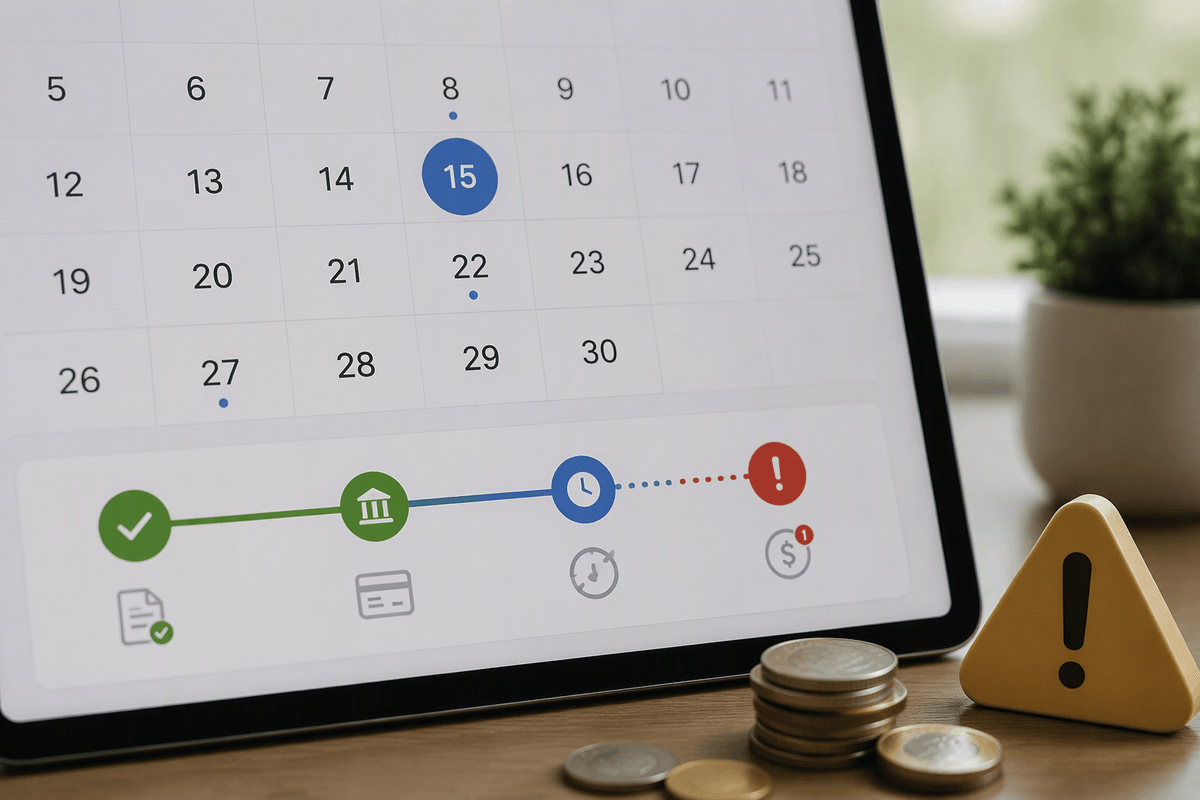
The calendar prompt solves “forgetting,” but it doesn’t solve “getting the timing slightly wrong.” A reminder fires, you pay, and it still doesn’t land when you assumed. Some card payments credit the same day, others don’t. Some payees treat a payment as on-time based on the date received, not the date you clicked “submit.” Add a weekend or a holiday and a safe three-day buffer quietly turns into one day—and that’s enough to trigger a late fee even though the money left your account.
The more expensive version is when the payment timing collides with cash-flow timing. If rent clears in the morning and a utility payment pulls in the afternoon, the order matters. A manual payment scheduled “for the due date” can hit before your paycheck posts, or before a transfer from savings completes, and the account goes negative for a few hours. That’s how a $70 bill becomes a $70 bill plus an overdraft fee, plus the stress of calling everyone to unwind it.
When scheduled payments beat memory-based routines
After a couple of close calls, the calendar stops feeling like a control system and starts feeling like a fragile agreement: it works as long as nothing unexpected happens at lunch, during travel, or on a week when three bills stack together. That’s usually when scheduled payments begin to outperform memory-based routines—not because they’re “set and forget,” but because they remove the moment-of-action from the exact moment of risk.
The practical win is consistency. If a credit card is always scheduled for, say, five days before the due date, weekends and posting delays become less dramatic. The same goes for fixed bills like insurance or loans: scheduling them shortly after payday tightens cash-flow tracking because the money leaves in a predictable window. The constraint is you still have to choose the date with your balance in mind. A scheduled pull that lands before a paycheck, or before rent clears, can recreate the overdraft problem—just with less warning.
Autopay and bank bill pay aren’t the same
Once payments are scheduled, the next surprise is that “autopay” can mean two very different systems. With vendor autopay, the company pulls money from your bank or card on the date they choose (sometimes the due date, sometimes earlier), and the timing can shift around weekends. That’s convenient for staying current, but it’s also the version most likely to collide with rent or an uneven paycheck cycle—because the pull happens whether you’ve looked at the balance that week or not.
Bank bill pay flips control. You push the payment from your bank, pick the send date, and the bank either transmits it electronically or mails a check if the payee can’t take e-payments. That solves the “surprise draft” problem, but it adds a different constraint: lead time. If the bank needs four or five business days (or a mailed check gets delayed), a payment you “sent” can still become a late fee.
The practical takeaway is that autopay reduces forgetting; bill pay reduces timing ambiguity. Neither eliminates monitoring.
Build a repeatable bill-pay workflow you can trust
At this point the goal shifts from “don’t miss” to “make it boring.” A workable system usually ends up as a short list: fixed bills get scheduled pushes right after payday, variable bills get a recurring “check and pay” block twice a month, and true autopay is reserved for the few items where a late fee is worse than a surprise draft. The constraint is time—you have to protect a 15-minute window that can’t be bumped by meetings.
Then add the guardrails that keep it trustworthy: one “bill pay” account with a small buffer, alerts for low balance and large withdrawals, and a monthly reconciliation where you match posted payments to statements. If something fails, the workflow catches it before the next due date, not after.

![7 Best Rental Listing Sites [Where to List Apartment Rentals]](static/image/2026/08/18/75e4f38f-928f-4a37-9c77-77d68c8911d4.png)