Why Moldova surprises first-time visitors
The first surprise in Moldova is how quickly “just popping over from Romania” turns into real decision-making. Chișinău is compact and inexpensive, but it’s not a city that overwhelms you with must-see landmarks—so your trip value depends on the day trips you commit to.
The second surprise is the friction-to-reward ratio: the highlights (Orheiul Vechi, big cellars like Cricova or Mileștii Mici, maybe Transnistria) can be genuinely memorable, but they don’t always slot neatly into public transport schedules, and tours can be time-specific. You’ll save money using minibuses, but you may burn half a day on timing; you’ll save time with a driver, but pay more than you expected for a “cheap” country. Moldova feels small on the map, yet planning it is oddly strategic.
Where to go: cities, monasteries, countryside
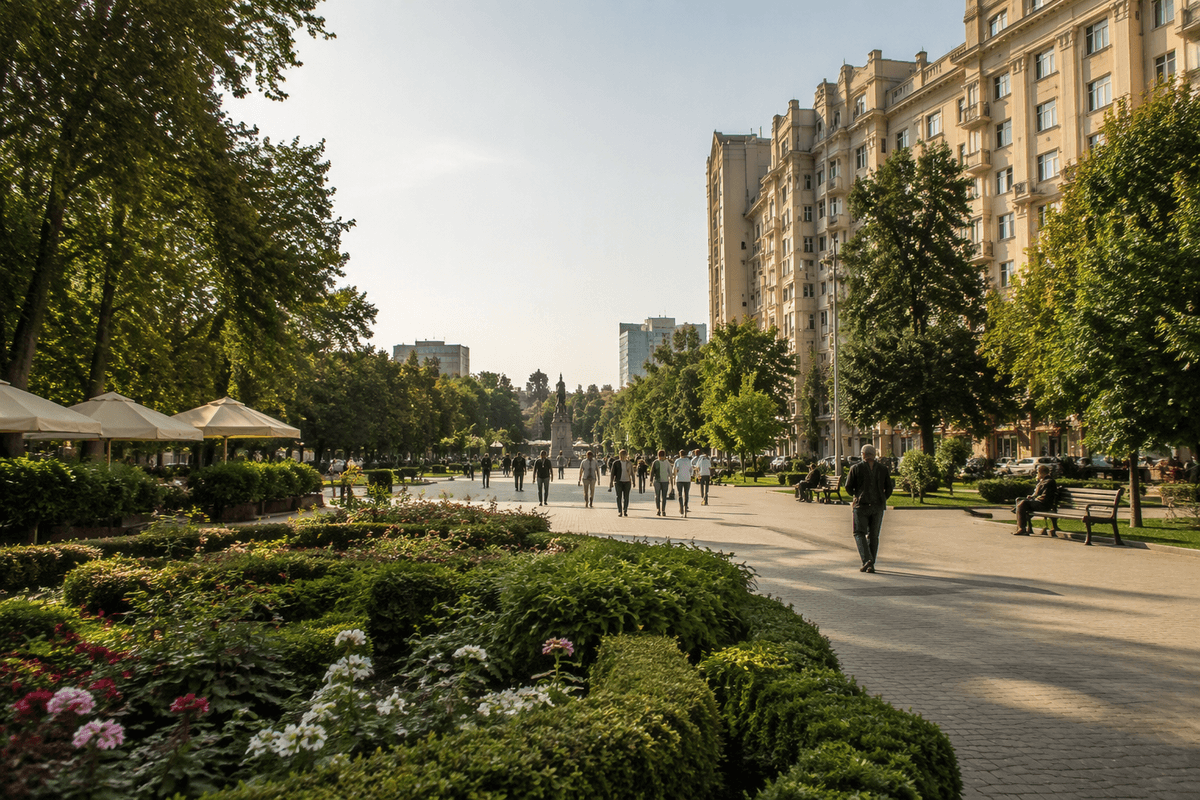
My first morning in Chișinău, the main “decision” wasn’t what to see—it was whether to treat the city as a base camp or as a destination. The center (Stefan cel Mare, the parks, a couple museums) is pleasant and cheap, but it rewards wandering more than checklist sightseeing. If you’re coming from Bucharest, the contrast can feel underwhelming unless you give Chișinău a specific job: a night of food and wine, a market walk, and a logistical reset before day trips.
If you only pick one non-wine day trip, Orheiul Vechi is the cleanest payoff: big landscape, cave monastery, and that “Moldova is real countryside” feeling. The catch is timing—marshrutkas exist, but they don’t line up politely with your lunch plans, and coming back late can mean waiting around with nothing to do. Going with a driver costs more, but it buys you daylight and a stop at a village viewpoint that public transport won’t.
For monasteries, places like Căpriana or Saharna can be meaningful—but they’re not plug-and-play without a car, and the experience depends on whether you arrive during quiet hours or a busy service. If your trip is 3–4 days, I’d treat monasteries as an add-on to a countryside loop rather than the main event.
Wine country: Cricova, Milestii Mici, Purcari
I hesitated over the wineries because the choice isn’t really “which is best,” it’s what kind of day you can tolerate: a slick, timed tour that runs like an attraction, or a longer, logistics-heavier outing that feels more like a trip. Also, you can’t just wander into most of these places casually—tours are scheduled, often language-specific, and if you miss your slot you don’t magically get a refund because you arrived on the wrong marshrutka.
Cricova is the easiest win from Chișinău: close enough that you can keep your day flexible, with a polished underground-cellar experience that’s more about scale and spectacle than quiet tasting. Mileștii Mici is similar in the “giant cellar” category, but it can feel more cumbersome without your own transport—great if you’re splitting a driver, less great if you’re trying to stitch it together cheaply. Purcari is the trade-off option: more distance, more commitment, but it delivers a more classic wine-estate vibe (and pairs better with a southern route) if you’re willing to give up most of a day to get there and back.
On a 3–4 day trip, I’d pick one cellar (Cricova or Mileștii Mici) and stop there; doubling up sounds efficient, but it’s how you end up spending your “Moldova” time in traffic and waiting rooms.
Transnistria: whether to visit, what to expect
I went back and forth on Transnistria because it’s the definition of a “worth it if you know why you’re going” day. If you want a glimpse of Tiraspol’s Soviet-leaning aesthetics and a place that feels noticeably different from Chișinău, it delivers fast. If you’re hoping for big attractions, it can feel like a long detour for a few photos, a river walk, and the novelty of being somewhere slightly tense on paper but quiet on the ground.
Logistically, it’s usually easiest as a day trip: minibus/train to Tiraspol, wander, then return before evening. The friction point is the entry process—expect a checkpoint, passport checks, and a small migration/entry slip you should keep until you leave. It’s not hard, but it’s not a “show up half-asleep and improvise” kind of morning.
The cards aren’t consistently useful, and you may need cash for meals and transport. If you’re on a 3–4 day trip, I’d only spend the day here if you’re cutting a second winery or monastery to make room.
Getting around, money, SIMs, and safety basics

The first time I tried to “save money” in Moldova, it was by defaulting to marshrutkas—and that’s when the country reminded me it’s cheap, not frictionless. In Chișinău, apps and taxis are the easiest time-for-money trade: you can keep a winery slot or make it back from Orheiul Vechi before the day collapses into waiting. Minibuses work, but they reward early starts and low expectations around exact departure times; if you’re traveling on a tight 3–4 day plan, one missed connection is basically a lost afternoon.
Cash matters more than you’ll expect. In the city you can often tap-to-pay, but day trips (and anything Transnistria-adjacent) are where small bills become the difference between “easy” and “annoying.” I’d pull cash from an ATM in Chișinău, then treat it like a budget tool: enough for transport, entry fees, and a backup meal if your card fails. Exchange booths exist, but you don’t want to be comparing rates when you should be catching a bus.
For SIMs, getting one in Chișinău is straightforward, and it’s worth it if you’re coordinating drivers or tour meetups—Wi‑Fi is not a plan. Safety-wise, the baseline feels calm; the realistic risks are the boring ones: crossing streets, late-night transport choices, and keeping your passport handy (but not flashing it) on checkpoint-style days.
Putting it together: trade-offs and trip pacing
On a 3-day squeeze (especially if you’re pairing Moldova with Romania), I’d stop trying to “see Moldova” and give it a clear shape: one flexible Chișinău evening, one high-payoff countryside day (Orheiul Vechi), and one timed anchor (a single cellar tour). It works because each day has a different failure mode—wine days punish lateness, marshrutka days punish optimism, and city days forgive both.
With 4–6 days, the trade-off flips: you can afford one logistics-heavy choice (Purcari or Transnistria), but not two back-to-back unless you like living by departure boards. The practical pacing trick is leaving a buffer day in Chișinău in the middle, not at the end—use it to fix cash, rebook a missed tour slot, or simply recover from the “cheap but effortful” transport rhythm. If you’re unsure, skip the second big day trip before you skip the SIM or the cash plan; the latter are what keep the former from unraveling.










![7 Best Rental Listing Sites [Where to List Apartment Rentals]](static/image/2026/08/18/75e4f38f-928f-4a37-9c77-77d68c8911d4.png)