What people expect from donating, and what’s different
The surprise often lands later, not in the chair. You may walk out thinking, “That was it?”—then notice your commute feels a little steeper, your coffee hits harder, or you’re suddenly aware of your heartbeat when you take the stairs. A first donation can feel oddly normal in the moment because you’re lying down, being watched, and running on adrenaline. The mismatch comes when you stand up, move around, and your day asks for the usual pace.
People tend to picture donating as “losing blood,” but what your body reacts to first is the quick shift in circulating volume. If sleep has been short, meals have been patchy, or you’ve been living a bit dehydrated without realizing it, there’s less buffer. It can feel like weakness, but in many cases it’s just your system trying to keep blood pressure steady while you keep moving.
How screening questions shape your donation experience
It can feel a little personal when the first thing you do is sit at a tablet and answer questions you didn’t expect to matter—how you slept, what you’ve eaten, whether you’re taking certain meds, where you’ve traveled. But those questions aren’t just about eligibility in a legal sense. They’re also quietly mapping how predictable your donation day is likely to be, especially if your week has already been running on shortcuts.
What trips people up is the gap between “I’m basically fine” and “my body has reserves today.” A rushed breakfast, a long commute, a late-night workout, or a couple of anxious hours can leave your blood pressure and hydration a bit less steady than usual, even if you don’t feel sick. Screening can’t measure that moment-to-moment buffer, so you may still be cleared—then feel surprisingly off once you’re upright and back in motion.
Why needle discomfort varies more than people assume
The sting can be tiny one day and oddly sharp the next, even with the same-sized needle. Sometimes it’s just the angle: a slight turn of your wrist to check your phone, a shoulder tensing when you hear the tape rip, or an arm that’s been gripping a commuter bag all morning. That tension can make the skin and the vein feel “less forgiving,” so the pressure reads as more intense than you expected.
What people often misread is the difference between surface discomfort and deeper pulling or aching. Cold rooms can tighten things up; caffeine, stress, or a rushed walk from the parking lot can leave your heart rate higher and your muscles braced. And veins aren’t identical from one arm to the other, or even from one hour to the next if you’re under-hydrated. None of this means something is wrong—it just means sensation is inconsistent, especially on a day your body is already running a little thin.
Lightheadedness is often a reflex, not weakness
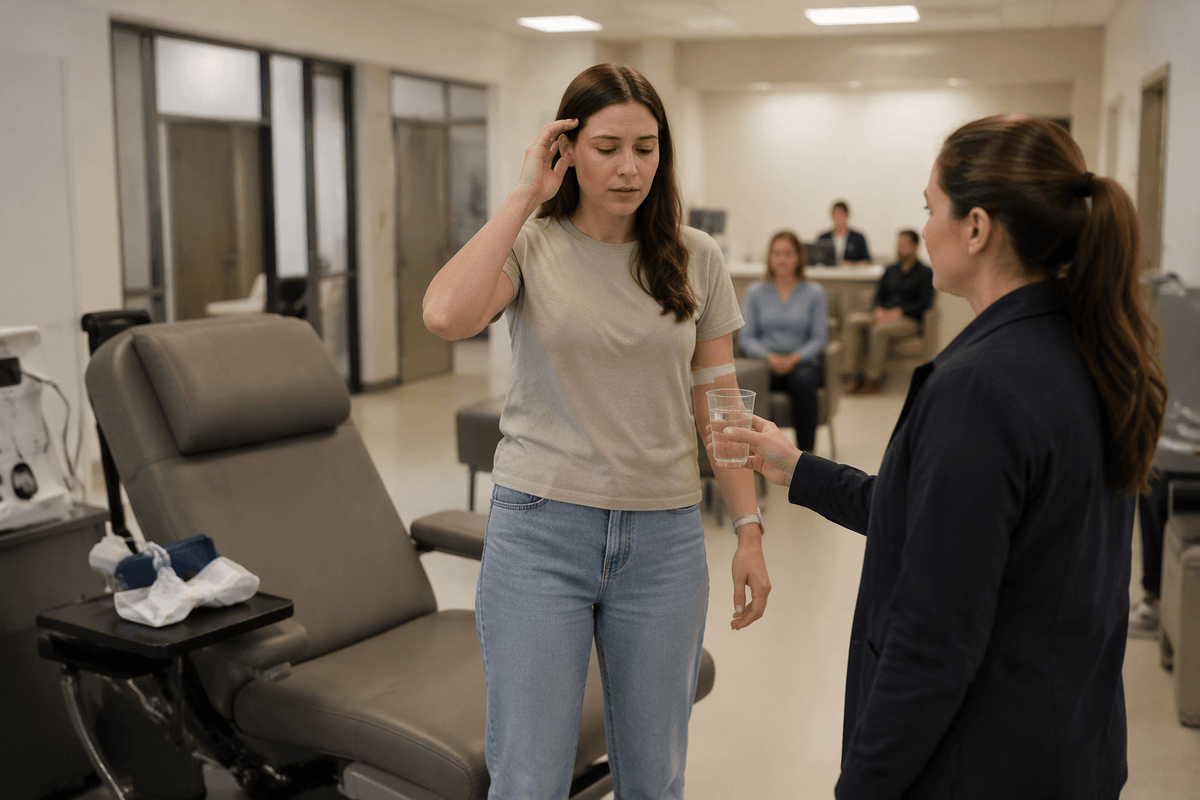
It often shows up in a small, almost confusing moment: you sit up to grab your things and the room feels a half-step behind you, like your eyes need an extra second to lock in. Some people describe a warm rush, a little nausea, or sudden sweating that doesn’t match how “fine” they felt a minute earlier. That’s the part that can feel embarrassing—your mind is steady, but your body acts like it’s hit a switch.
In many situations, that switch is a reflex. When blood volume drops quickly and you change position, your nervous system may overcorrect—heart rate and blood pressure wobble, and your brain briefly gets the message to conserve by making you sit or lie back down. First-time donors tend to be more surprised by it, especially if the day already included a skipped meal, low fluids, poor sleep, hard training, or a stressful commute. It isn’t a character flaw; it’s often just limited buffer showing up at an inconvenient time.
Well-meaning prep choices that can backfire unexpectedly
Sometimes the “prep” that feels responsible is exactly what makes the chair feel harder. You may double down on coffee because you slept poorly, or skip breakfast because you’re trying not to feel queasy. You might even push through a tough workout in the morning to “get it done,” then show up proud of yourself and oddly shaky. None of those choices are reckless on their own—they just stack up in a way that leaves less room for the quick volume shift your body has to manage.
Caffeine and stress can keep your heart rate a little high and your muscles a little braced, while an empty stomach can make the post-donation snack hit like a sudden sugar swing instead of steady fuel. Add a hot commute, a long wait in line, or a rushed walk across a parking lot, and the same person who “always handles things fine” may feel sweaty, lightheaded, or wiped out sooner than expected.
Hydration and salt: subtle drivers of how you feel

You notice it when you stand: your mouth feels a little dry, your legs feel oddly “hollow,” and the air-conditioned room suddenly seems warmer than it should. It’s easy to blame nerves, but for a lot of first-time donors it’s the quieter math of fluids and pressure. If you’ve been sipping just enough to get through meetings or a commute—especially after coffee—your body may already be running slightly concentrated. Then donation takes volume out quickly, and the usual tricks your system uses to keep blood pressure steady have less to work with.
Salt is the part people miss because it doesn’t feel like “hydration.” Water alone doesn’t always stay in circulation if your sodium intake has been low from irregular meals, light lunches, or a week of “clean eating.” In that setup, you can drink and still feel a little floaty when you move around, because holding onto fluid is the harder step. Two similar days can feel different if one included a salty sandwich and the other was just a banana and coffee.
Fatigue and iron loss can show up days later
A couple days later is when some people notice the real “cost”—not dramatic, just a dull drag. You sleep a normal amount, but the afternoon meeting feels heavier. Your usual walk from the train takes more effort, or a workout that’s typically fine suddenly feels like you’re breathing through thicker air. Because donation day itself can pass without much trouble, it’s easy to misread this as getting sick or “being out of shape,” when it may simply be your body catching up.
Part of that slower bounce-back can be iron. Even if you don’t feel lightheaded anymore, replacing the red blood cells you gave takes time, and low-ish iron stores don’t always announce themselves until you ask for extra output—long shifts, hard training, skipped lunches, or a week of short sleep. You can feel fine after one donation and noticeably flat after another, depending on what your routines looked like in the weeks leading up to it.


![7 Best Rental Listing Sites [Where to List Apartment Rentals]](static/image/2026/08/18/75e4f38f-928f-4a37-9c77-77d68c8911d4.png)