London foodie setup: DS Must prioritize; Opt wander
I nearly wasted my first London evening toggling between “Borough Market now” and “save it for daylight,” and that’s the core setup decision: lock your anchors first, then let the rest be improv. For a 4-day, Zone 1–2 trip, I’d pick one non-negotiable per day (market meal, Sunday roast, a global street-food crawl, one splurge) because London’s distances add up fast if you chase “best of” lists across town.
DS Must: book anything tasting-menu-ish and any restaurant you’d be genuinely sad to miss—prime tables disappear, and walk-ins can mean a two-hour wait that eats your evening. Everything else stays Opt: build each day around one neighborhood so you can wander into bakeries and pubs without constantly watching the Tube map. Expect markets to peak midday, roasts to book out on Sundays, and dinners to run later than you think—especially if you snack your way through the afternoon.
Day 1 Markets: DS Must Borough; Opt Maltby; Skip chains
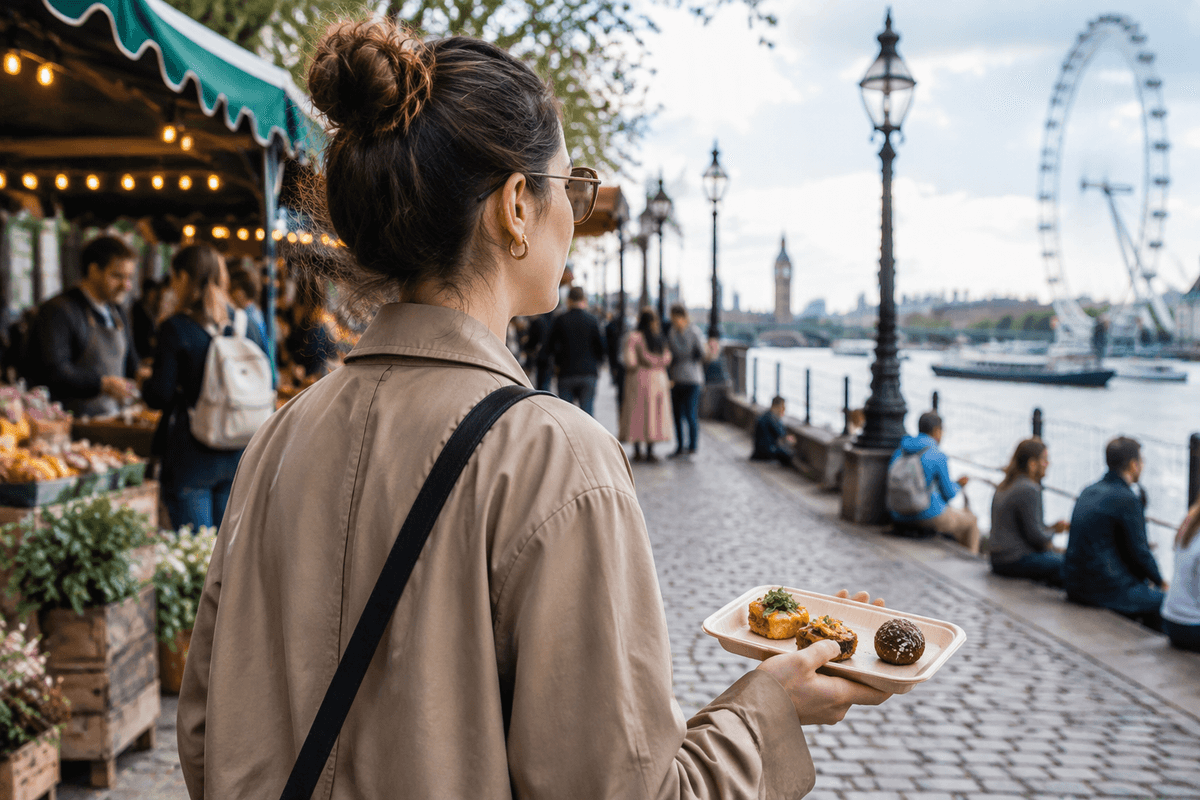
I made the mistake of arriving at Borough Market at true lunch hour—12:30 on a weekday—and immediately had to choose between “follow the smell” and “follow the shortest line.” If you want it to feel fun instead of competitive, aim for a late-morning first lap (think 10:30–11:30). You’ll still see the iconic stalls in full swing, but you can actually browse without getting pinballed through the main aisle, and you won’t burn your whole afternoon in queues.
DS Must: treat Borough as a grazing meal, not a single heroic plate. Pick two savory bites plus one sweet, then stop—otherwise you’ll hit flavor fatigue and your budget disappears in taps-and-go. The constraint is seating: there isn’t much, and “just stand over there” gets old fast, so build in a short walk to the river or a nearby pub for a reset. Opt: if you’re still hungry (or you want something calmer), slide over to Maltby Street Market on a weekend; it’s smaller and easier to work through, but it’s also more limited on days/hours, so it’s not a reliable Plan A.
Skip the chains nearby, even when you’re tempted by air-conditioning and an empty table—they’re a comfort blanket that costs you a prime London food window. If you need predictable, make it a backup for later, not the main event.
Day 2 Classics: DS Must roast; Opt pie; Skip bland pubs
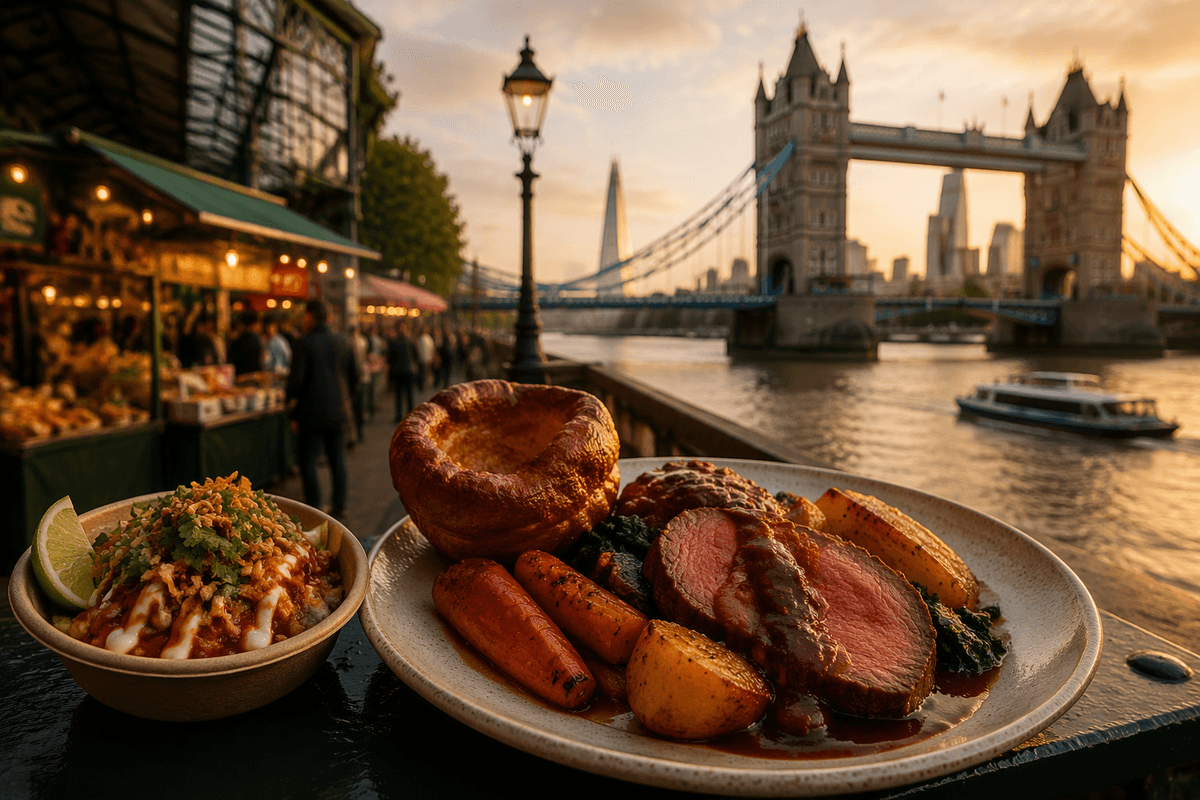
By Day 2 I was craving something “classic” without turning the day into a pub crawl with mediocre beige food, and the first decision was timing: if you want a proper roast, you can’t treat it like a casual drop-in. Even on a non-Sunday, the best tables for a roast-style lunch (or the places that do it as a signature) fill up, and waiting around hungry makes you over-order pints just to justify your seat. DS Must: pick one roast pub and reserve a lunch slot; it keeps the rest of the afternoon flexible instead of dictated by whoever answers the door first.
Once you’ve committed to a roast, the pie becomes Opt—because doing both big-starch meals back-to-back sounds fun on paper and lands heavy in real life. If you still want a pie, make it a split or an early dinner, and choose a place that’s known for the pastry (crisp, not soggy) rather than “a pub that also has pies.” Skip bland pubs with long menus and no clear specialty; the convenience of an empty table is real, but you’ll pay for it in forgettable food and that slightly deflated feeling of having used a prime meal on something you could’ve eaten anywhere.
Day 3 Global: DS Must Brick Lane; Opt Chinatown; Skip queues
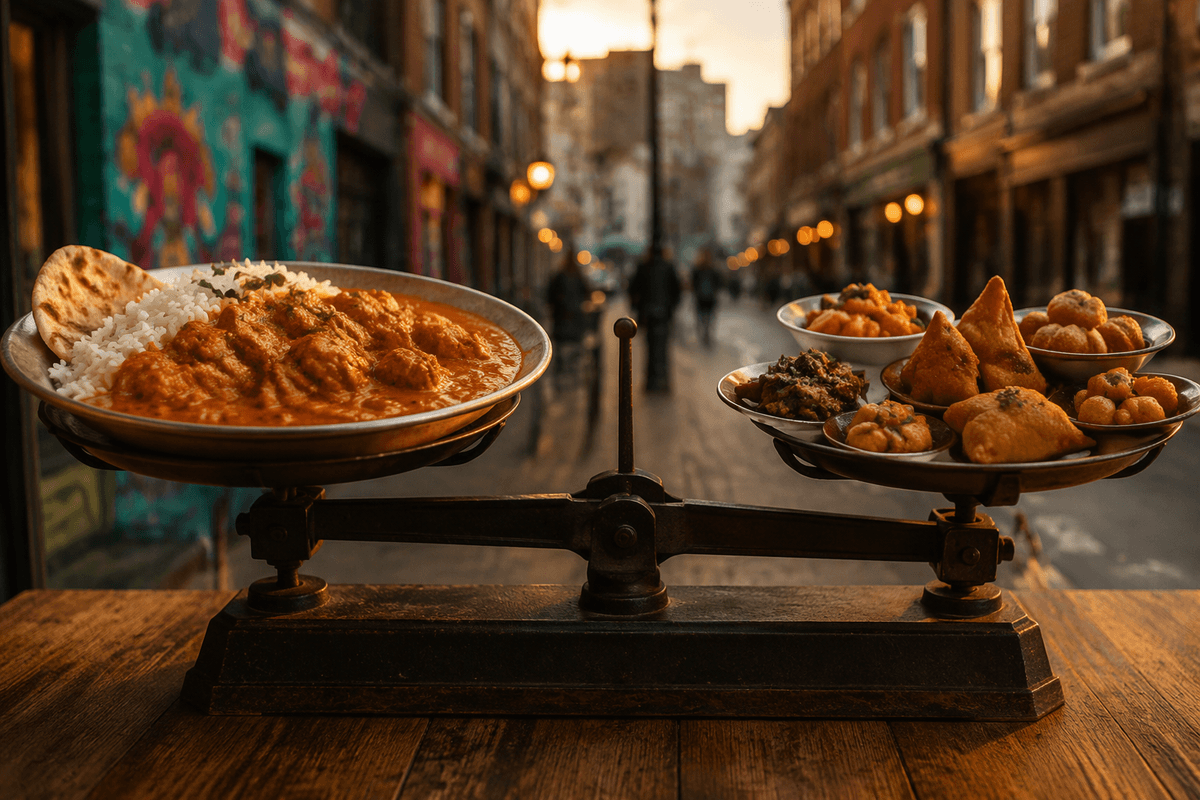
I got to Brick Lane thinking I’d “just browse” and ended up negotiating with my stomach: do I commit to one proper sit-down curry, or keep it moving and sample snacks without blowing the rest of the day? DS Must: base lunch here and treat it like a neighborhood crawl, not a single restaurant mission. Go earlier than your instincts (late morning into early lunch) so the street feels lively without turning into shoulder-to-shoulder crowd control, and you can actually compare options before hunger makes you impulsive.
Brick Lane works best when you set one constraint: pick either a full plate (biryani/curry) or a spread of smaller bites, because doing both gets expensive and weirdly exhausting. If you’re tempted by the loudest host with the “special price,” pause—those deals often come with the least memorable food, and your time is worth more than a marginal discount.
Opt: Chinatown in the evening if you’re still hungry and want a completely different rhythm, but build in a rule to protect your night—no hour-long lines. If a spot is spilling onto the pavement, pivot to a nearby backup and save the queue for a place you’d genuinely fly back for.
Day 4 Splurge: DS Must tasting; Opt cocktails; Skip tourist teas
I booked the splurge for the last night and still nearly fumbled it by assuming “London has tons of options, we’ll decide later.” That’s the one meal I wouldn’t leave to vibes: if you want a tasting menu (or even a set menu at a serious place), commit early and then build the day around it so you’re not sprinting across town in rush-hour clothes, already hungry, already annoyed.
DS Must: pick a tasting that fits your real budget ceiling after service, not just the headline price—pairings, service charge, and “one more glass” add up fast. The win is certainty: a fixed menu means you stop decision-fatiguing, and it’s a clean contrast to three days of grazing and pubs. Aim for an earlier seating if you’re jet-lagged or you want a calmer room; later slots can feel buzzy, but they also push you into a pricey post-dinner ride home.
Opt: cocktails nearby afterward, but only if you’ve got the energy—tasting menus can land heavier than you expect. Skip the tourist afternoon teas that require a long queue or a themed dining room; they’re time-expensive, sugar-heavy, and they crowd out the one dinner where London really earns the splurge.
Wrap-up: DS Must book hits; Opt revisit
On the morning you realize your map is now a constellation of saves, the move is to downgrade ambition, not add another “must.” DS Must: lock the two things that routinely fail as walk-ins—your roast table and your splurge—then treat everything else as flexible grazing. It’s not about being rigid; it’s about avoiding the specific misery of being hungry at 7:30 p.m. while three places tell you it’s a 90-minute wait.
If you have extra pockets of time, use them to revisit what actually hit, not what you feel you’re “supposed” to do. A second lap of a market stall you loved beats chasing a famous spot across town and burning an hour on the Tube. The realistic takeaway: London rewards repetition more than perfection—especially on a mid-range budget where every detour has a cost.








![14 Best Personal Finance Tips [Financial Planning Tips for 2026]](static/image/2026/08/19/386a0029-2149-472a-96de-933a87ee417e.jpeg)