The long-stay Thailand dream vs reality
The fantasy version of a long stay in Thailand is simple: a clean condo, cheap meals, warm evenings, and your best workweek of the year. The real version starts with small math—how many days you can actually stay, when you’ll need to move (or do a border run), and whether your “island month” still makes sense once you’re answering calls at 9 p.m. because your clients are back in the U.S.
Thailand can feel effortless for a two-week holiday and oddly demanding at month two. Heat is manageable until you need to walk somewhere at noon. Air quality is a non-issue until burning season turns a morning run into a scratchy-throat day. And the budget wins are real—right up until you choose comfort: a quieter building, reliable Wi‑Fi, backup power, and a neighborhood you can live in, not just visit.
The trade-off that matters most: you’re not choosing “Thailand.” You’re choosing a base (city vs island), a season (crowds vs rain vs haze), and a work rhythm you can repeat without burning out.
Who thrives here (and who struggles)
The first week is usually when you feel invincible—cheap food, fast Grab rides, a laptop on a balcony. The first month is when you learn who Thailand rewards. If you’re flexible with small discomforts (sweat, noise, a little bureaucracy), and you can build routine quickly—same café, same gym, same few streets—Thailand tends to feel easy in a way that compounds.
It works especially well for remote workers who don’t need perfect silence, can shift calls a bit around U.S. time zones, and don’t mind choosing “good enough” convenience over “ideal” location. You’ll thrive if you can treat weather as a planning variable (early mornings, midday indoors), and you’re okay with trading space for a building that’s newer, quieter, and actually has stable internet.
People who struggle tend to want Western predictability at local prices: spotless sidewalks, consistent customer service, and a home setup that never requires a workaround. If your productivity collapses with heat, smoke season, or constant scooter noise—or if you hate the idea of visa cadence shaping your calendar—Thailand can start to feel less like freedom and more like friction.
Cost of living: expectations, trade-offs, surprises
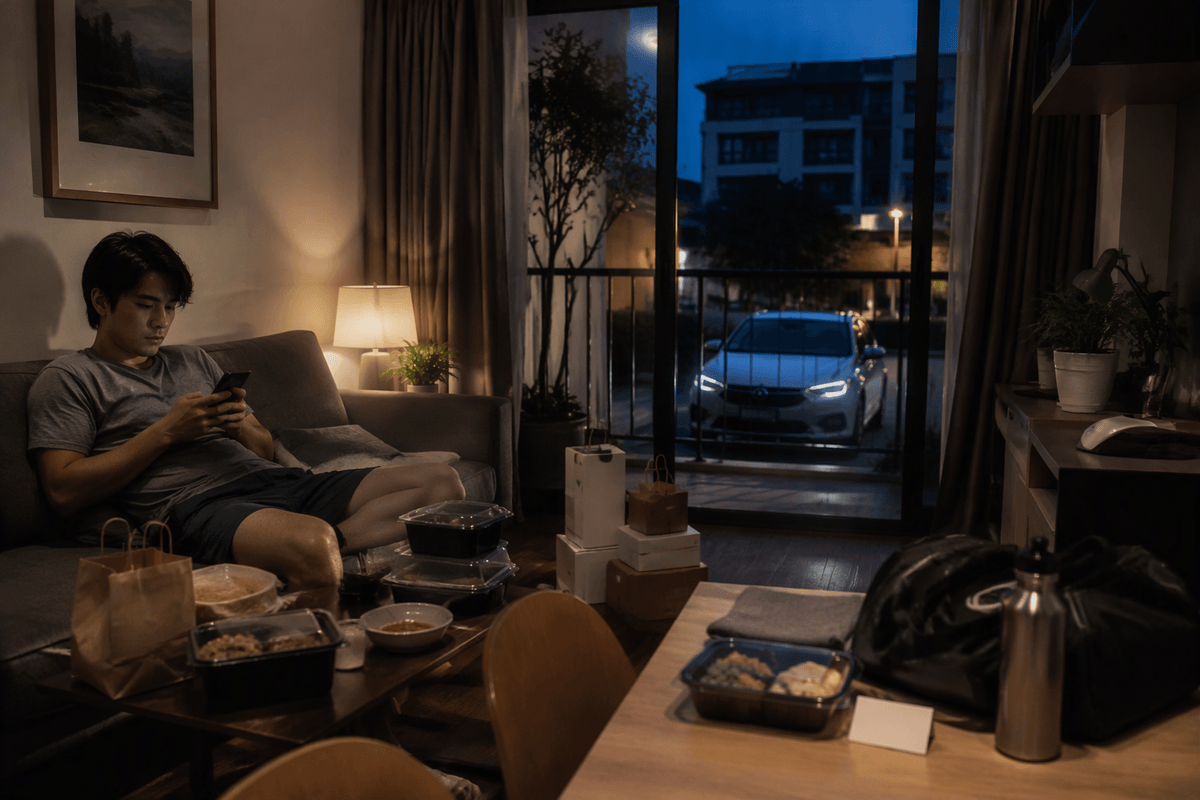
The first budgeting mistake is treating “Thailand is cheap” as a fixed number instead of a dial you control. The dial moves the moment you choose comfort: a newer condo with soundproof-ish windows, a real desk, and internet that doesn’t crater when the building fills up. In Bangkok or Chiang Mai, mid-range living can land in a wide band (roughly $1,200–$2,500/month depending on rent and how often you “Westernize” your routine), but it only stays low if you’re okay with some friction—heat, noise, or older buildings.
Islands are where expectations break. Rent and short-term inventory spike, especially in peak season, and the “cheap meals” math changes when you’re paying tourist-area pricing or relying on delivery because it’s raining sideways. Scooters can keep transport costs down, but add a risk-and-hassle tax (licenses, helmets, minor injuries that derail workdays).
The surprise win is how controllable day-to-day costs are once you lock a routine: a monthly gym, a few reliable food spots, and one coworking option for the days your apartment Wi‑Fi isn’t enough. The surprise loss is how quickly convenience spending creeps in when you’re tired.
Visas and stay options: what’s realistic
The first real planning snag is realizing your calendar is only “flexible” until it collides with immigration rules—and in Thailand those rules can shift mid-year. As of August 21, 2026, U.S. citizens are still generally described by official sources as getting a 60-day visa-exempt entry that can be extended once by 30 days at immigration (the standard 1,900 THB extension fee), but the Thai Cabinet has also approved changes that would roll parts of that back after Royal Gazette publication—so you can’t build a 4–6 month plan on “I’ll just wing it.”
For a clean 1–3 months, the least-friction path is usually either visa-exempt + one extension, or applying in advance for a tourist visa (TR) so you’re not negotiating time at the border. If you’re genuinely targeting 3–6 months without constant resets, the DTV is the first option that matches remote-work reality (long stays per entry), but it comes with higher paperwork and financial-proof thresholds.
Education visas can work, but only if you actually want the classes—otherwise the “cheap workaround” turns into a weekly obligation plus reporting/admin that eats focus.
Daily life: housing, transport, healthcare, routines
The first place daily life gets real is housing: the “nice condo” photos rarely tell you about hallway noise, thin walls, or Wi‑Fi that’s fine at noon and collapses at 8 p.m. when everyone streams. For a 1–6 month stay, I’d bias toward newer buildings with a real workspace and ask for an actual speed test screenshot, not just “fast internet.” The trade-off is obvious: you pay more to buy back sleep and focus, and in islands that premium jumps sharply in peak season.
Transport is the next fork. In Bangkok, trains and Grab can keep life simple, but commuting across the city every day will quietly eat your patience. In Chiang Mai and on islands, a scooter turns errands into a 10-minute loop—until it rains hard, you’re fatigued, or you realize you’re one minor spill away from losing a workweek. If you do ride, budget for gear and don’t treat short distances as “safe by default.”
Healthcare is usually a pleasant surprise for mid-range travelers—good private clinics and hospitals—but it’s still a system you want to set up before you need it: know the nearest reputable option, carry your insurance details, and keep a buffer for upfront payments. The routine that holds everything together is boring: early mornings outside, midday indoors, and one backup workspace for the days your apartment isn’t enough.
Culture, community, and work-productivity factors
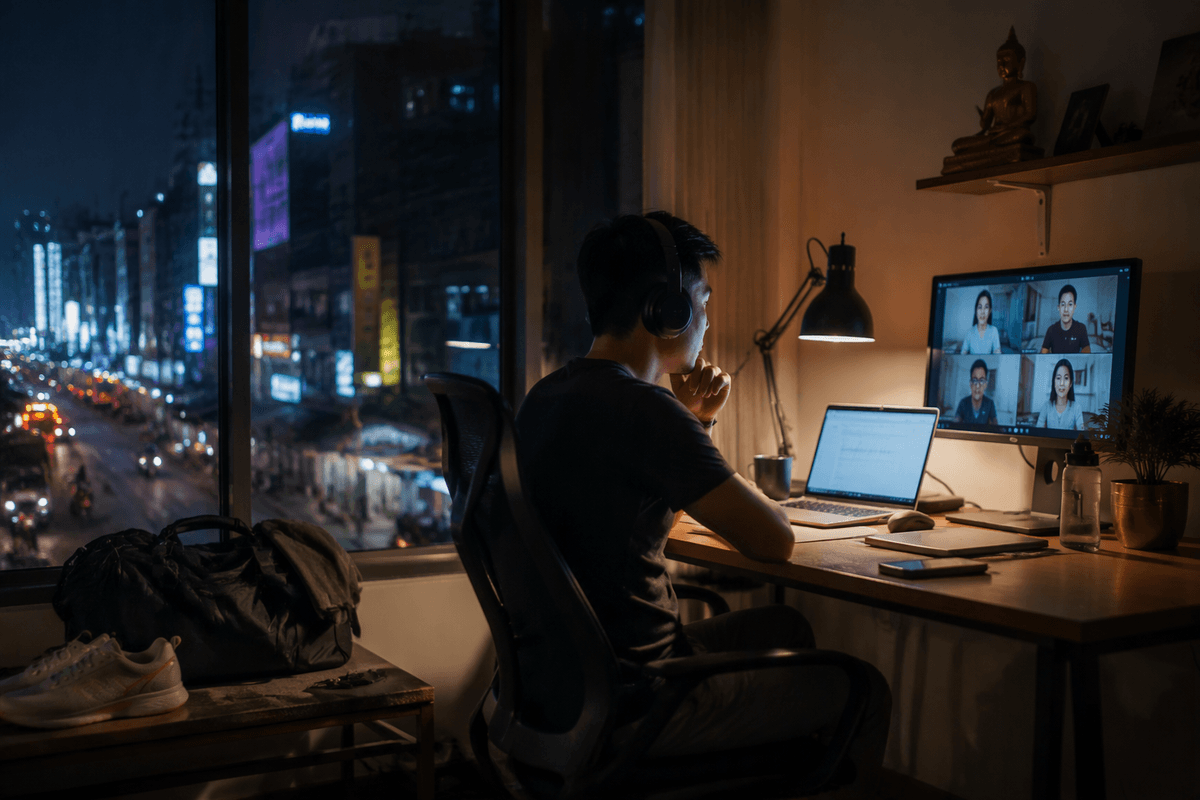
The first productivity shock usually isn’t Wi‑Fi—it’s tempo. Thailand runs on a softer kind of urgency: friendly, indirect, and sometimes slower than you want when you’re trying to fix a router, negotiate a deposit, or get a billing detail corrected before a workday starts. It’s rarely hostile, but it can be friction if you’re used to crisp yes/no answers and fast escalation paths.
Community is easier to find than people expect, but it’s uneven. In Bangkok and Chiang Mai, coworking spaces and recurring meetups make it simple to build a “work-adjacent” social circle without turning every night into a party. On islands, the social scene can skew transient—great for a fun week, less great if you need a steady routine and peers who keep office hours. The trade-off is obvious: the more scenic the base, the more self-discipline you’ll need to protect deep work.
For U.S.-aligned time zones, the late calls are the real tax. Plan for a split day (errands + gym early, focused work late), and don’t underestimate noise: scooters, construction, and nightlife are manageable—until you’re on your third back-to-back meeting and your patience runs out.
Decision checklist and a low-risk trial plan
I usually know within 10 days whether a place can hold a routine—but I don’t always admit it until something small breaks: the “fast” Wi‑Fi drops during a call, the bedroom picks up bar noise, or the late U.S. meetings turn my afternoons into a fog. So for a decision checklist, I’d start with the non-negotiables that actually protect your workweek: can you sleep (noise + heat), can you take calls (stable internet + backup workspace), and can you reset your body (walkable early mornings, gym, and air that doesn’t wreck you in the season you’ll be there).
Then run the trade-off math you’ll live with: city convenience (Bangkok) vs lower-intensity routine (Chiang Mai) vs the island tax (higher rent, rain disruptions, scooter dependency). If your plan requires “I’ll just do a border run” or “I’ll find a quiet apartment later,” treat that as a risk item, not a detail—because immigration cadence and housing inventory have a way of deciding your calendar for you.
The low-risk trial plan: book 2 weeks in a practical neighborhood, not a scenic one; choose a building that can plausibly be month-two livable; and spend week one testing friction on purpose (work from your apartment and a coworking space, ride your commute at the hours you’ll actually do it, price out your real food routine). If it still feels easy after a full work cycle, extend—if it doesn’t, you’ve learned it cheaply.




![14 Best Personal Finance Tips [Financial Planning Tips for 2026]](static/image/2026/08/19/386a0029-2149-472a-96de-933a87ee417e.jpeg)