Why the Panama Canal feels bigger than expected
At 5:30 a.m., with coffee in hand and the first tugboats idling beside us, I realized my mental image of the Panama Canal—one neat “engineering stop”—was too small. Even before the locks, you’re watching pilots board, lines go taut, and a ship the size of a small neighborhood get positioned with inches to spare. It feels more like a moving system than a sightseeing moment, and that’s why it lands bigger.
What expands it is the pacing: long stretches of slow approach punctuated by short, high-focus bursts when the gates close and the water starts to rise. If you only budget “a morning,” you’ll get restless; if you treat it as an all-day event, the hours make sense. The friction is that the best parts don’t always happen on your preferred schedule—heat builds, shade is limited, and timing can slide.
And then there’s scale-by-contrast. The canal isn’t just locks; it’s lakes, bridges, and working shorelines that don’t pose for photos. That realism is the point, but it can disappoint travelers expecting a constant highlight reel.
Choosing the right Silversea Canal itinerary
The first real decision is whether you want a full canal transit as the centerpiece or a partial transit as a “taste” that leaves more room for ports. Full transits tend to deliver the satisfying arc—locks, lake, bridges, the whole choreography—but they also consume a full day of slow movement that can feel long if you’re not interested in the mechanics. Partial transits can be easier on limited vacation days, yet they risk feeling like you paid for the headline and saw only the opening act.
Then look hard at the embark/disembark ports. One-way itineraries can be efficient (you’re not retracing sea days), but they add airfare complexity and raise the stakes if flights or luggage misbehave. Round-trip patterns simplify logistics, though they sometimes “buy” canal time with extra sea days that you may or may not want.
For staterooms, don’t overpay for a single-direction view you won’t use. If you like privacy and air-conditioning, a veranda lets you step out for each lock cycle without committing to the crowds—but you’ll trade the widest angles for comfort. If you’re committed to photography and narration, prioritize quick access to open decks; elevator waits at peak moments are a surprisingly real part of the day.
Best viewing spots onboard during the locks
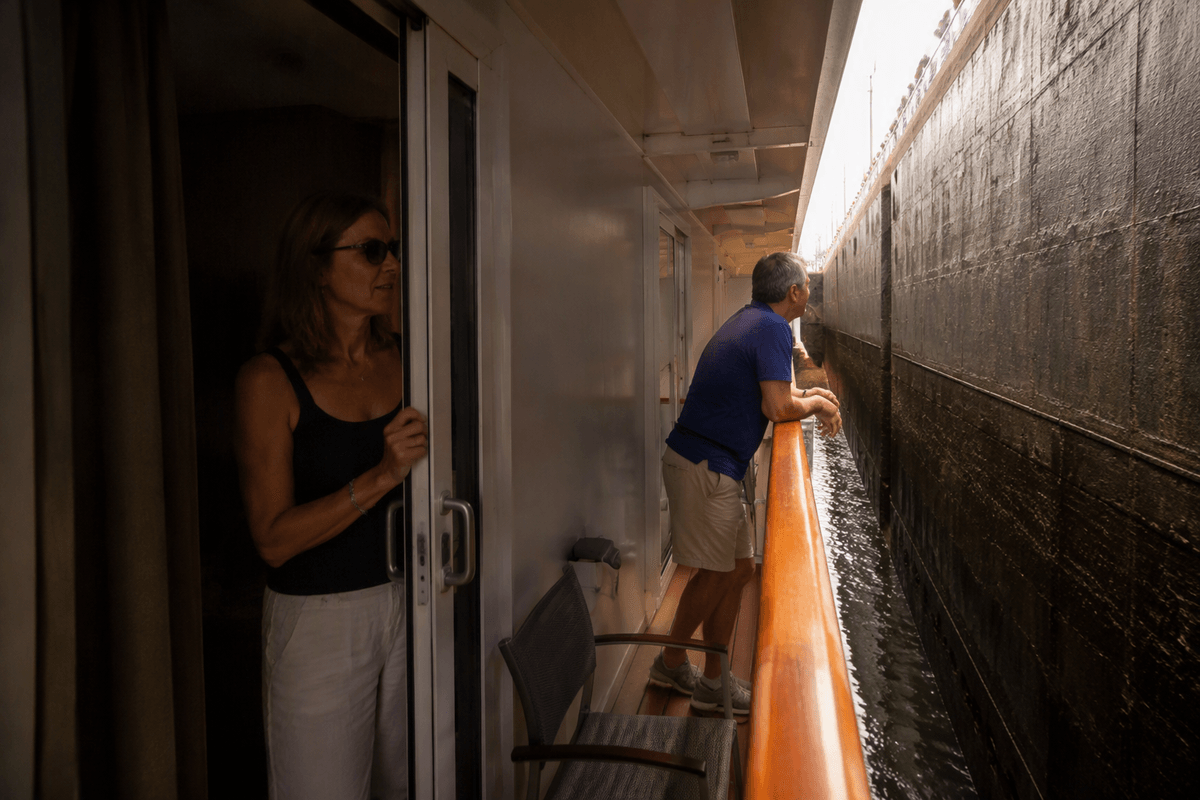
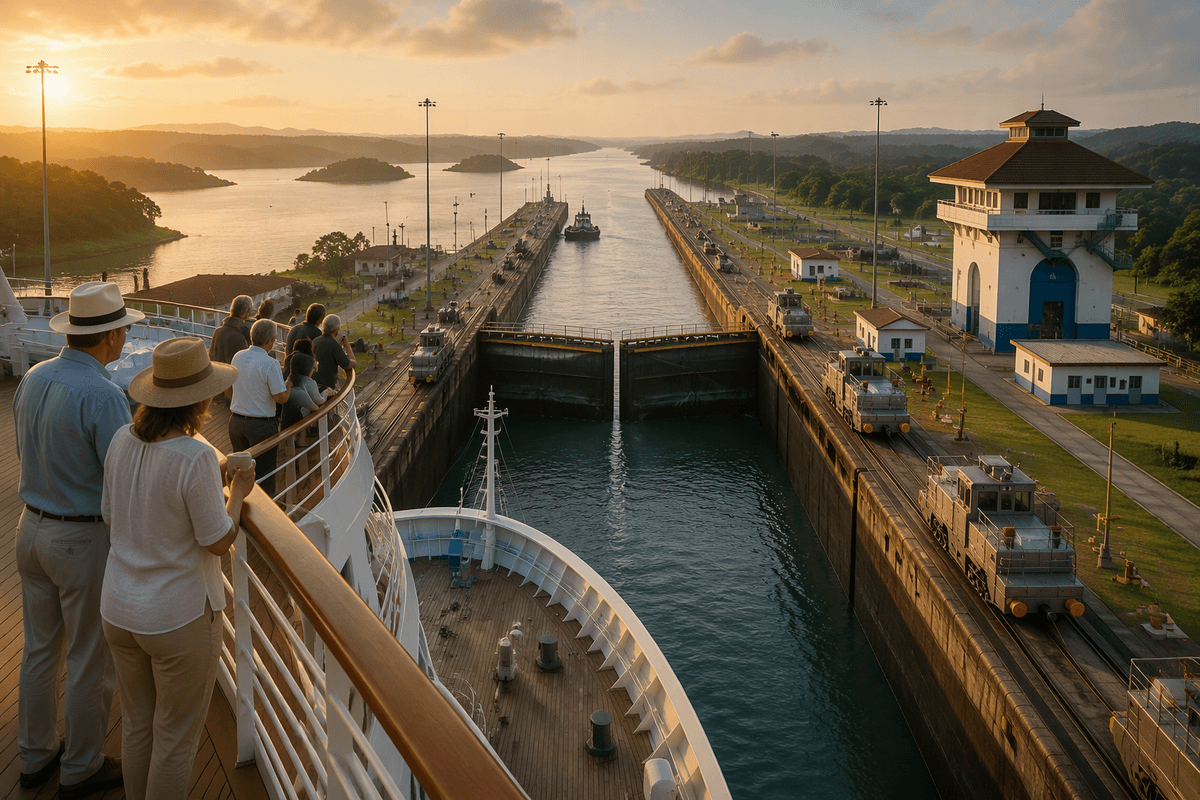
The first time the ship slowed to a near-hover outside the lock approach, we learned quickly that “best spot” changes by the minute—and that you can’t teleport when everyone has the same idea. The open forward-facing areas give you the cleanest sense of alignment (tug placement, line handling, the gates coming at you), but they also fill early and stay packed, which can feel like standing-room theater in humid air.
If you want a calmer experience, the higher open decks are more forgiving: you lose some of the up-close lock wall drama, yet you gain sightlines over railings and fewer blocked angles when people cluster at the glass. For many couples, the most reliable middle ground is your veranda—especially if you’re sensitive to heat or crowds—because you can step out for each “action burst” and retreat during the slow stretches. Just accept that on a veranda you’ll miss whichever side the locomotives and line work favors, and you’ll be listening more than seeing when the ship is tight to the wall.
One practical constraint: pick a spot before the gates start moving. Once the lock cycle begins, the awkward part isn’t finding a view—it’s getting there without stair bottlenecks and long elevator queues.
What you’ll actually see: locks, lakes, bridges
Mid-morning, once the first lock cycle finishes, there’s a brief sense of “Was that it?”—and that’s where expectations can wobble. The locks are the visual drama: concrete walls close in, lines stay under tension, and the water level change feels almost too smooth for how much weight is moving. But the action comes in intervals, and if you only step outside for the approach and then disappear, you’ll miss the small details that make it click (line handling, tug choreography, the gates sealing). The limiting factor is heat and crowd patience; staying out for the whole sequence is rewarding, but not always comfortable.
Between lock sets, Gatun Lake can feel surprisingly quiet—wide water, green shoreline, and a working-waterway calm that reads more like a transit day than a “tour.” That’s when narration matters: without it, the lake portion can blur into “we’re cruising slowly,” especially if you’re watching from a shaded lounge rather than an open deck. The bridges are the punctuation marks—quick, photogenic, and gone faster than you expect—so if photos matter, you’ll want to be in position early rather than assuming you’ll have time to adjust once they appear.
Shore excursions that deepen the canal story
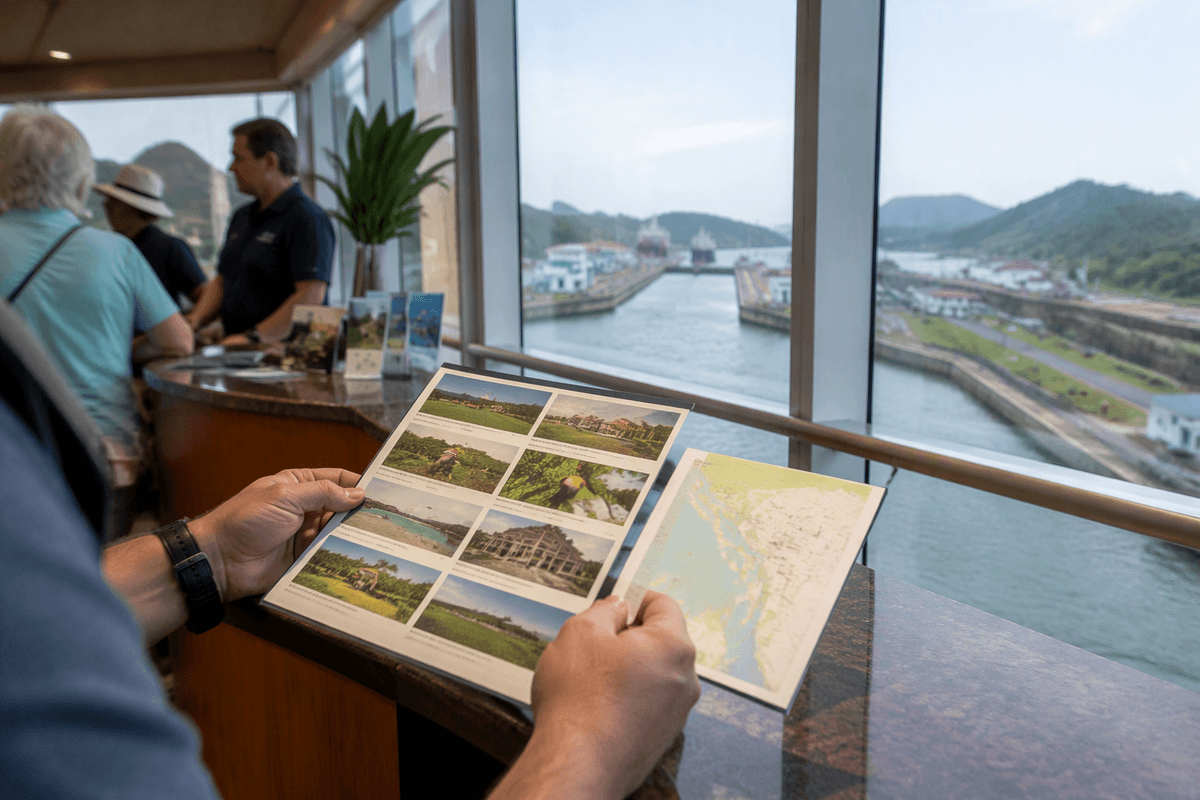
By the time we were scanning the shore-excursion list, the temptation was to treat it like a “bonus port day,” but the best picks are the ones that explain what you’ve been watching—without stealing your energy right before (or right after) the long canal hours. If your itinerary offers a Canal Zone-style outing (visitor center, museum, or a viewpoint over the locks), it can make the onboard narration stick; the catch is timing. Book it too close to transit day and you risk showing up tired, sun-worn, and less patient for the slow stretches.
The other category that really adds context is anything that puts you near the railway or historic canal communities—less cinematic, more “this is how people live alongside a megaproject.” It’s not always the most comfortable option: buses can be chilly, stops can feel rushed, and you may trade peak-deck time for shore logistics. If you’re choosing just one, I’d prioritize the excursion that guarantees a clear vantage point over one that promises a long shopping stop—canal understanding compounds, souvenir time doesn’t.
How to prepare: timing, comfort, photos, narration
The night before, the only thing we truly “planned” was a soft alarm—because canal timing isn’t yours to command. If you’re hoping to see the first approach, assume you’ll be up early, but also accept that schedules slide and you might be standing at the rail watching nothing happen for a while. That’s where couples can misfire: one person wants to camp out for the full sequence, the other wants breakfast and a chair. Decide in advance which lock cycles are “must-see,” and which you’re fine catching from a shaded distance.
Comfort is less about gear and more about managing exposure. On open decks, heat and humidity compound fast, and the wind you expect often disappears once you’re tucked between walls. I liked a light layer for air-conditioned interiors, then a hat and something breathable outside; the friction is carrying it all when deck space is tight. If you’re sensitive to standing, claim a spot where you can lean and rotate positions rather than holding a front-row line all day.
For photos, zoom helps more than wide-angle once the ship is tight to the wall, but you’ll still miss moments if you wait to react—bridges and line work appear, then vanish. And don’t underestimate narration: if Silversea’s commentary is offered in multiple locations, pick the one you can actually hear. A perfect view with muffled audio can feel strangely flat.
Is a Silversea Canal transit worth it for you?
At some point mid-transit, I watched two kinds of passengers emerge: the ones still tracking every line, gate, and radio call, and the ones quietly retreating to a cool lounge, satisfied they’d “seen enough.” That split is your clue. If you like learning as much as scenery—and you’re okay treating one day as the main event—a Silversea canal day usually earns its keep, especially with the comfort to duck in and out of heat and crowds.
If your vacation days are tight and you crave high-variety ports, a partial transit (or a non-canal itinerary) can feel like smarter value. The fare makes sense when you’re paying for perspective: access, narration, and pacing—not constant visual fireworks. My decision cue: if you’d rewatch the lock sequence even once, book it; if you’d rather “check the box,” don’t build the trip around it.