Your money plan breaks when life speeds up
The plan looked tidy on a spreadsheet: extra to the card balance, a steady 401(k) contribution, maybe a weekend away if the month behaved. Then the month doesn’t. Daycare raises rates, the car needs tires, and work gets oddly quiet at the same time. Nothing is catastrophic, but the timing is. The “right” move becomes unclear because every choice seems to trade future progress for today’s stability.
In practice, money plans break at the edges: overtime disappears, a variable bill jumps, a promo APR ends, a medical copay lands before payday. When life speeds up, the budget isn’t wrong—it’s simply too brittle. The goal isn’t perfect forecasting. It’s building a sequence that still works when the calendar and cash flow stop cooperating.
First, stop the quiet leaks in cash flow
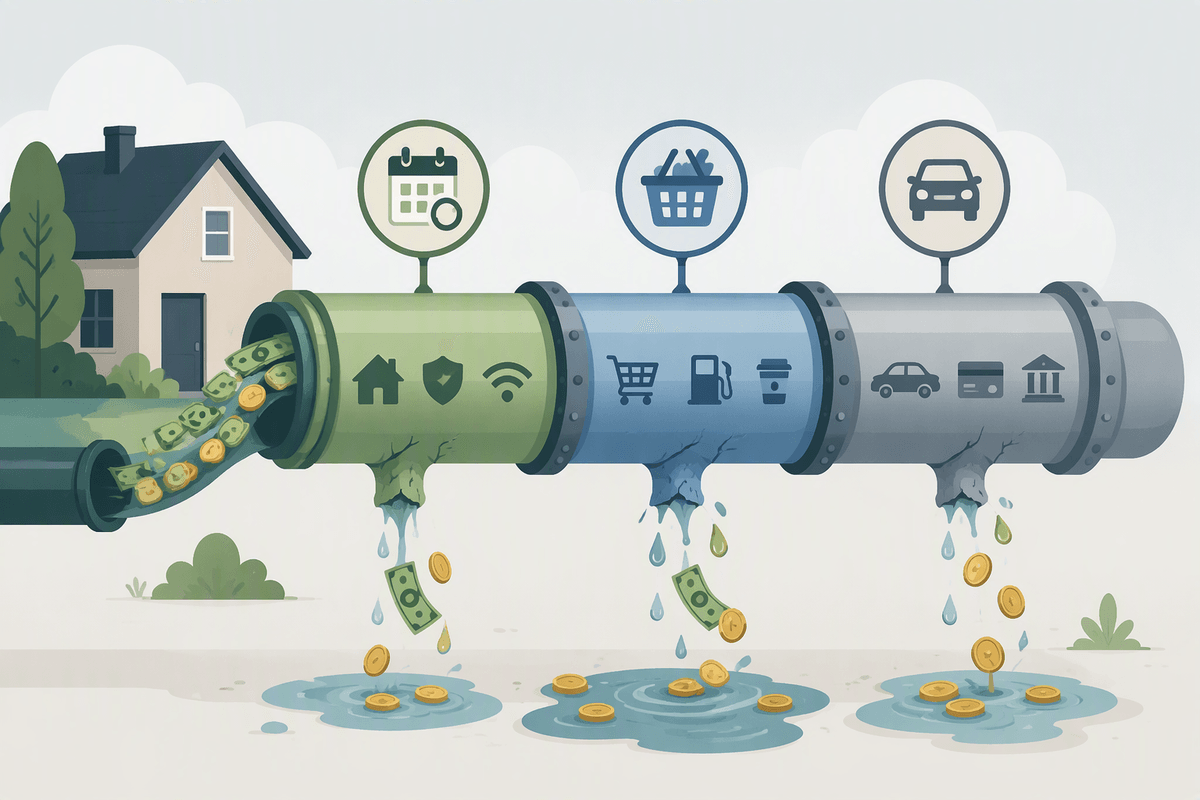
The first fix usually isn’t a new strategy—it’s getting back the money that’s already leaving without permission. The leaks are rarely dramatic. They’re the $18 subscription that quietly repriced, the insurance premium that renewed higher, the “we’ll just put it on the card” week that becomes a pattern. In a fast month, those small outflows steal the exact margin that would have covered tires or a copay without derailing everything.
I’ve found the most reliable move is a short cash-flow audit with a tight scope: last 30–60 days of transactions, then flag anything that is (1) recurring, (2) variable, or (3) financed. Recurring is where price creep hides. Variable is where busy weeks inflate spending. Financed is where interest turns convenience into a monthly tax. The constraint is time, so the goal isn’t category perfection—it’s finding two or three reversals worth at least $150–$300 a month.
Once those reversals are identified, treat them like a temporary “rate reset”: cancel, renegotiate, or cap them for one billing cycle, then reassess. If that feels too aggressive, keep the service but force a downgrade. The point is to rebuild breathing room before you decide how hard to push debt or investing next.
Build a starter emergency fund before optimizing anything
That breathing room is where the next decision gets messy: it’s tempting to send every freed dollar straight at the card or bump the 401(k) again, because that feels productive. But when the month is already unpredictable, the real drag isn’t math—it’s the penalty for being short on cash at the wrong moment. One surprise bill turns into a late fee, an overdraft, or another swipe on the same high-rate balance you were trying to escape.
A starter emergency fund is not a “fully funded” goal; it’s a shock absorber. I look for an amount that stops the most common chain reaction: $500–$1,500 for many households, or one paycheck if income is lumpy. The constraint is opportunity cost, so the rule is simple: build it fast, keep it boring, and keep it separate. A high-yield savings account is fine; the point is same-day access without market risk or transfer friction.
Once it exists, the plan changes behavior. You can pay bills without floating them, avoid raiding retirement contributions, and choose which problem to tackle next instead of reacting to timing. That’s when “optimization” starts paying off, because one bad week stops owning the whole month.
Attack high-interest debt without losing flexibility
With that shock absorber in place, the next mistake is going “all in” on the card and then getting forced right back onto it the first time timing breaks. High-interest debt is expensive, but cash fragility is what keeps it alive. I treat flexibility like a required line item: keep the starter fund untouched, and keep a small checking buffer so the next copay doesn’t turn into another swipe at 24% APR. The constraint is real—there’s only so much surplus—so the plan has to survive a bad week, not just a clean month.
From there, get ruthless but narrow. Pay minimums on everything, then aim every extra dollar at the highest APR balance (avalanche), especially if a promo rate is ending within the next 60–90 days. If a balance transfer is on the table, price it like a loan: transfer fee, promo length, and the risk that you don’t pay it off before the rate snaps back. Progress is faster when the payment is automatic and the target is simple, but only if you don’t borrow back your own momentum.
Invest while you’re still worried it’s risky
After a few months of paying down balances, the next hesitation is predictable: investing starts to feel like volunteering for a loss. Cash in a high-yield account looks calm, and extra debt payments feel guaranteed. But if the only investing plan is “when markets look safer,” contributions drift, employer matches get missed, and the timeline quietly shortens. The constraint is psychological as much as financial—you’re trying to keep traction without taking a hit you can’t afford to sit through.
I’ve had the cleanest results treating retirement investing like a fixed utility bill, not a mood-based decision. Start with the match, then add a small step-up—1% of pay or a flat $50–$100 per paycheck—on a set date. Put it in a broad, low-cost index fund mix you can hold through a bad year. If volatility still feels too loud, route new contributions to a more conservative allocation rather than stopping; stopping creates timing risk, while a steadier mix keeps the habit alive.
The key check is practical: if a 20% drop would force you back onto the card or empty the starter fund, the issue isn’t investing—it’s that the cash cushion and debt plan aren’t quite stable yet. Adjust the contribution, not the identity of “investor,” and keep the sequence moving.
Insure the plan against one bad year

Once investing is running in the background, the weak spot usually isn’t returns—it’s exposure. A single bad year can show up as a job gap, a hospital bill that hits the deductible, or a storm claim that lands alongside higher renewal premiums. If the only backstop is the credit card, the last few sections unwind fast. The constraint is cost, so the goal isn’t “more coverage,” it’s removing the few risks that can create five-figure damage in one month.
I review insurance the same way I’d review a balance-transfer offer: what’s the downside if I’m wrong? Start with health, auto, and renters/home. Confirm deductibles you could actually pay from the starter fund, then price the gap if you can’t. If term life is relevant, match it to the years someone depends on your income, not to a vague “forever” number. Disability coverage is the one people skip because it’s boring—until a short medical leave turns cash flow into a crisis.
The result you’re looking for is simple: one ugly year shouldn’t force retirement loans, missed mortgage payments, or new high-interest debt. When that’s true, the rest of the plan stops feeling fragile and starts feeling repeatable.
A simple 30-day sequence you can repeat
Once the big risks are boxed in, the plan works best when it has a cadence. Not a “new budget” every Monday, but a short loop that fits into a busy month and still catches problems early—before the card becomes the default. The constraint is attention: if the routine takes more than an hour or requires perfect categorizing, it won’t survive school pickups, travel weeks, or a rough stretch at work.
Week 1: do a 20-minute cash check—bill dates, account balances, and any unusual charges—then set one automatic extra debt payment you can keep even in a bad month. Week 2: move a fixed transfer into the starter fund (even $50–$100) and confirm deductibles match what’s actually in cash. Week 3: increase retirement contributions by a small step or lock in the match if it’s drifting. Week 4: pick one “leak” to reverse for the next cycle. Repeat until the month stops feeling like a surprise.