Summer babysitting feels easy until heat changes everything
The morning can feel surprisingly manageable—shoes on, a quick snack, and everyone’s excited to “get outside.” But a little later, the same walk to the park starts to feel longer than it should. Your shirt sticks, your knees complain on the curb, and you realize you’ve been talking more slowly, watching the kids with a narrower kind of attention. It can be confusing because nothing dramatic happened. The heat just kept building while the day stayed busy.
What often changes first is pace. Kids may still sprint and climb, while you’re doing the quieter work: carrying bottles, lifting a toddler, scanning for traffic, answering questions. If lunch is late or you’re saving the water “for later,” fatigue can show up as a mild headache, a shorter temper, or that slightly foggy feeling when you try to count heads. By the time you notice it, you may already be running low.
Heat stress looks different in children than adults
It can throw you off when a child looks “fine” in the heat—pink cheeks, still chatting, still asking to go again—while your own body is quietly sending louder signals. Adults often notice heat as heaviness: a dragging walk back to the car, a pulse that won’t settle, sweat that feels more tiring than refreshing. Kids, on the other hand, can keep moving right past the point you’d naturally slow down, then seem to switch all at once.
Some days it shows up as behavior before anything else: sudden silliness that tips into crankiness, a child who can’t decide what they want, or little arguments that start over nothing. They may not mention thirst, and they may not recognize “dizzy” the way an adult would. Meanwhile, you might be watching their energy and missing your own warning signs—especially if you’re trying to stay upbeat, keep plans on track, or juggle your usual meds and mealtimes.
Hydration isn’t just water, it’s timing
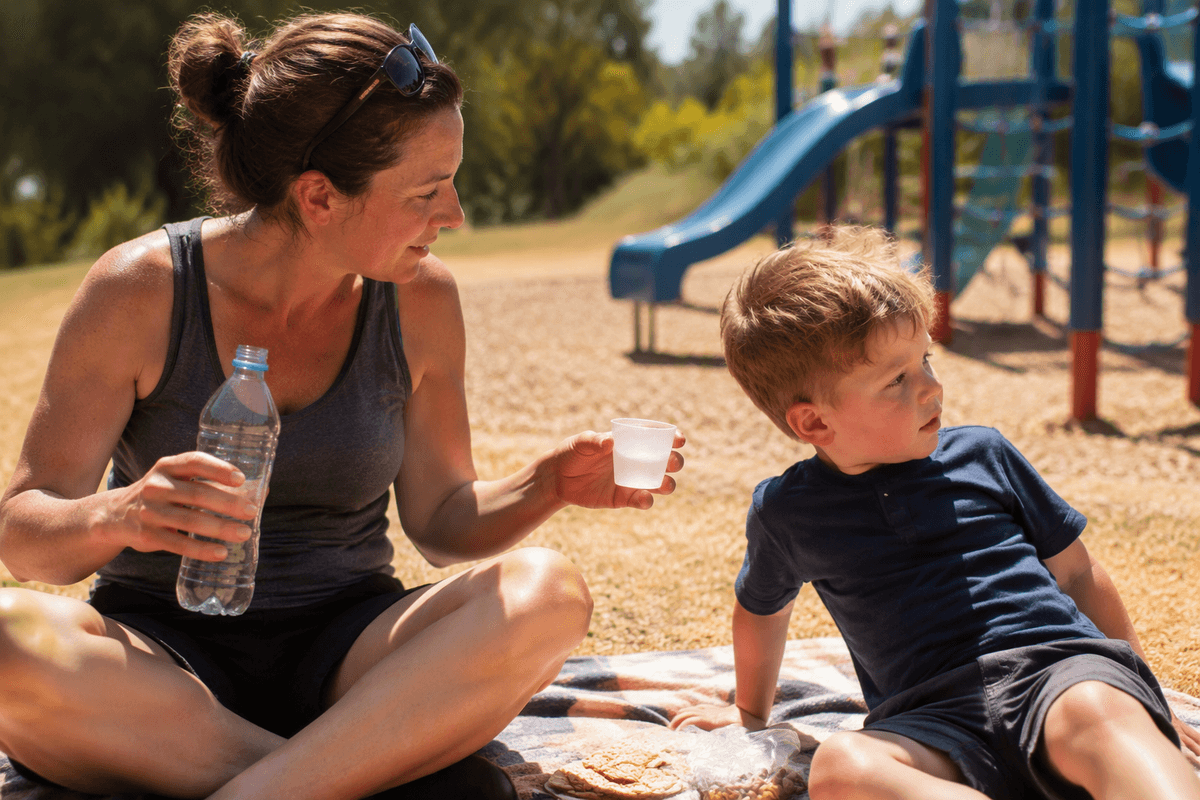
It’s easy to notice the empty bottle only when you’re already back at the bench, and by then everyone’s “not thirsty.” That’s the tricky part: thirst often shows up late, and kids can be distracted enough to skip it entirely. If the first real drink doesn’t happen until the playground feels hottest, you may be trying to catch up while also keeping eyes on climbing, running, and where the shoes went. For you, it can feel like your mouth is dry but your head is the bigger problem—slower thinking, a dull headache, or a sudden dip in patience.
Timing matters because water alone doesn’t always land well on an empty stomach, especially if lunch is drifting later than usual. A child who’s been sweating and snacking on crackers may perk up briefly, then get irritable again. And if you’re taking blood pressure pills, diuretics, or anything that makes you urinate more, the “we’ll drink when we get home” plan can turn into a long, uncomfortable hour where everyone’s mood gets harder to manage.
Outdoor plans work better with flexible intensity
Halfway across the parking lot, the plan can start to feel heavier than it did at the kitchen table. The kids are pulling toward the splash pad, you’re holding a towel bag that seems to have doubled in weight, and the sun is suddenly on the back of your neck with nowhere to hide. It’s easy to tell yourself you just need to “push through” to the fun part, even when your steps have gotten smaller and your attention is working harder to keep up.
Outdoor time often goes smoother when it isn’t treated like one long, steady outing. A burst of running, then a slow loop in the shade, then a short stop that feels “too early” can actually keep everyone calmer later. The children may look like they can keep turning the dial up, while your body is quietly asking for the opposite. If you notice yourself getting clumsier with bags, more annoyed by normal kid noise, or slower to respond when they dart, that may be the day telling you the intensity is too high to hold for long.
Water play adds joy and hidden supervision strain
The first squeal at a sprinkler can feel like the easiest win of the day. Suddenly everyone’s laughing, nobody’s asking for screens, and you get a moment where the heat seems less bossy. But water play has a way of pulling your attention in two directions at once: you’re enjoying the calm while also tracking slick feet, surprise splashes to the face, and the child who wanders closer to the deeper spot “just for a second.” It can be tiring in a different way than the playground, because the stakes feel higher even when the mood is lighter.
It also asks more of your body than it looks like it should. Standing on hot concrete with wet shoes, bending for towels, and doing quick little lunges toward a runner can add up fast—especially if you’re trying not to slip. Kids may cool off and stay energized, while you’re getting subtly chilled and sunbaked at the same time, then realizing you’ve gone quiet because you’re concentrating so hard. The fun can be real, but the supervision can leave you more drained than you expected.
Bites, rashes, and sunburn create delayed problems
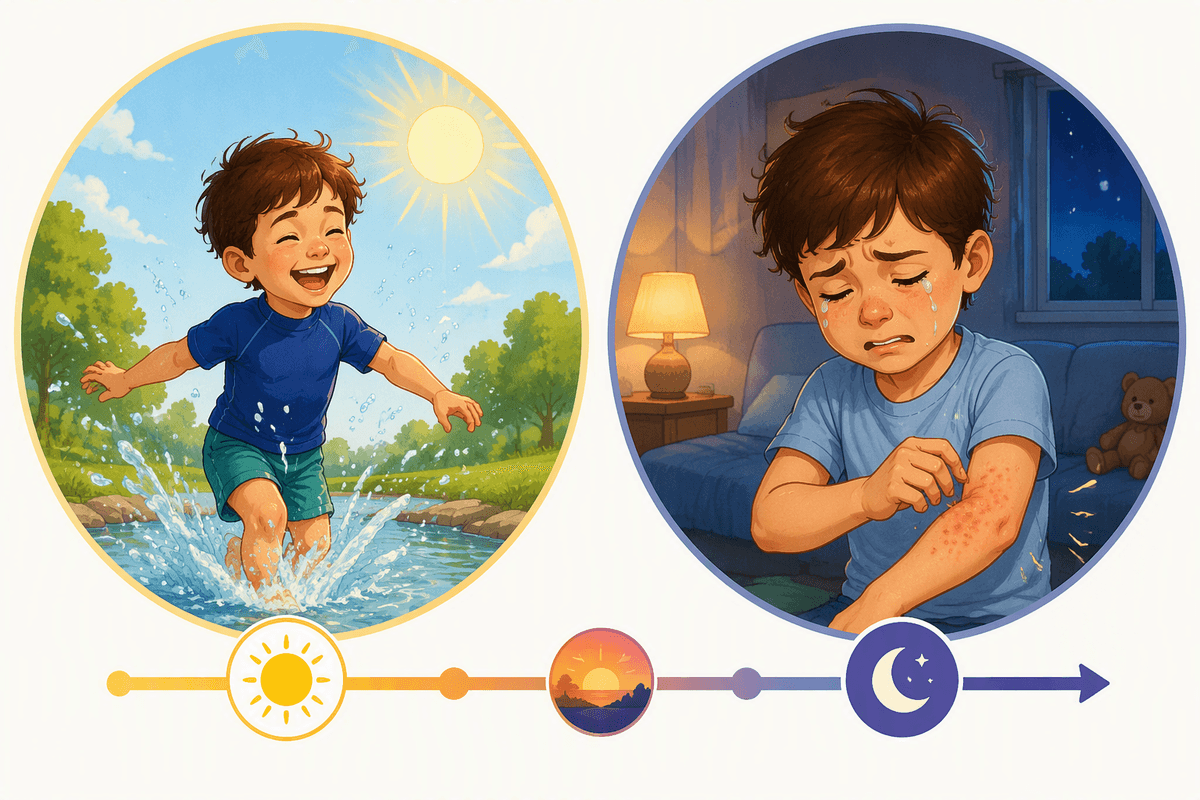
Later in the afternoon, it can look like everyone “made it” through the heat—until a child starts rubbing a calf that suddenly has a red bump, or you notice shoulders turning pink as you load the car. That’s the tricky part with bites, rashes, and sunburn: they often announce themselves after the high-energy part is over. A kid who was happily splashing may become oddly teary in the evening, not because anything new happened, but because their skin is now itchy, tight, or stinging.
For you, those delayed complaints can land when your own reserves are already low. It’s harder to sort out what’s urgent when you’re tired, a little dehydrated, and trying to remember whether that redness was there before lunch. In some situations, the discomfort also changes behavior the next day—less patience, more whining, more “don’t touch me”—and it can feel like a mood problem when it’s really a lingering, uncomfortable body signal.
Simple check-ins reduce uncertainty and conflict later
In the late afternoon, it can feel like the day suddenly turns into little disputes: “I’m hungry,” “I’m bored,” “He pushed me,” while you’re thinking about the drive home and why your own head feels a bit tight. Sometimes the misunderstanding is that everyone assumes the problem is behavior. But often it’s a pileup—heat, missed drinks, sunscreen in someone’s eyes, a scratchy shirt, a snack that didn’t really count as lunch.
Simple check-ins can cut through that fog, especially when you’re tired and don’t want to negotiate. A quick pause to notice faces (too flushed or too quiet), hands (sticky, shaky, sandy), and your own cues (dry mouth, slower reactions, sharper tone) can prevent the “why didn’t you tell me earlier?” moment later. It won’t make the day perfect—kids forget, adults push through—but it can keep small discomforts from turning into an end-of-day standoff.

![7 Best Rental Listing Sites [Where to List Apartment Rentals]](static/image/2026/08/18/75e4f38f-928f-4a37-9c77-77d68c8911d4.png)